Chinese New Year 2027 and Your Spring Restock: Working Backwards From the Delivery Date
Chinese New Year falls on 6 February 2027. Qingdao production effectively stops around 20 January and does not recover until late February — five to six weeks of lost capacity, not the two buyers usually budget for. Here is the working-backwards calendar for an April 2027 shelf date, plus the cold-weather specs worth freezing before the PO.
- Chinese New Year falls on 6 February 2027. Production effectively winds down around 20 January and recovers in late February: five to six weeks of lost capacity, not two.
- For an April 2027 shelf date: freeze the spec and issue the PO by early December 2026, and get the container loaded before mid-January.
- Cold-weather specs worth locking before the PO: 280G poly-cotton canopy and a PU 5000mm floor on the rooftop tent, a dedicated stove chimney jack on the 17.28 m² cabin, and the correct gas type for your market on the water heater.
- MOQ 1 on rooftop tents and MOQ 5 on inflatable cabins let you air-freight a sample in December and still commit the container in January.
At a glance
| Metric | Option A | Option B |
|---|---|---|
| Model in this guide | ZT-RCH23 hard-shell rooftop tent | ZT-IA17-31 inflatable cabin |
| Best for | 2–3 person vehicle-based overlanding | 8–10 person base camp / glamping site |
| Weight & packed size | 46 kg net, 8 cm closed profile | 49.2 kg gross, packed approx. 0.77 × 0.44 × 0.39 m |
| Canopy & waterproofing | 280G poly-cotton ripstop, PU 5000mm bottom | 420D/600D Oxford or 210g TC canvas, PU 5000mm floor |
| Cold-weather feature | Poly-cotton weave reduces morning condensation | Dedicated stove chimney jack for a wood stove |
| MOQ & reference price | MOQ 1 · USD 610–1,099 | MOQ 5 · USD 280–561 |
It is the last week of November, and the question we get from European and North American buyers right now is rarely about fabric or price. It is about timing. If you want hard-shell rooftop tents or glamping cabins on a retail floor by April 2027, the event that decides your delivery date is not the vessel you book in February. It is Chinese New Year, which falls on 6 February 2027.
Factories do not stop on a single day. In Qingdao our lines typically wind down in the third week of January as workers travel back to their home provinces, and output does not fully recover until late February. Add recruitment, retraining and first-article inspection on the restart, and you lose five to six weeks of effective production capacity, not the two weeks most buyers budget for.
Working backwards from an April shelf date looks like this. Freeze the specification and issue the purchase order in early December. Allow 10–15 days for materials: aluminium profiles, carbon shells, 420D/600D Oxford, PVC air beams. Production runs 20–30 days. The container should be loaded before mid-January. Ocean transit is typically 30–45 days to Europe and 18–28 days to the US West Coast, plus five to ten days for customs and inland delivery. That lands goods in March, which leaves April as the retail window. Miss the December order and the same goods arrive in May.
The real risk is not the vessel, it is the specification change. Once the container slot is booked, anything not frozen (fabric weight, waterproof rating, stove chimney jack, heater model, retail packaging) cannot be changed in January without losing the slot entirely. Buyers who treat the purchase order as the opening of a negotiation usually end up air-freighting later, at several times the unit cost.
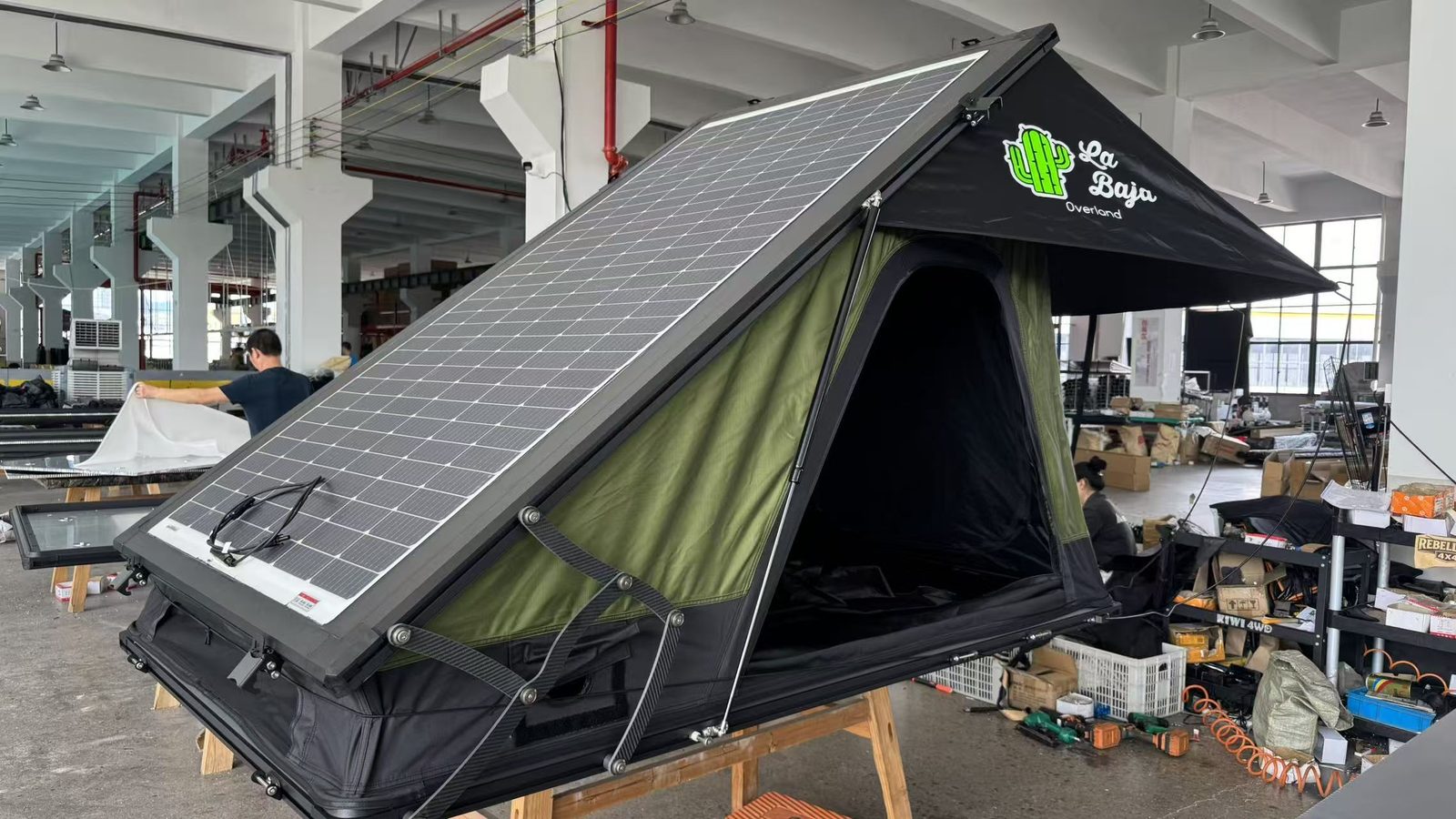
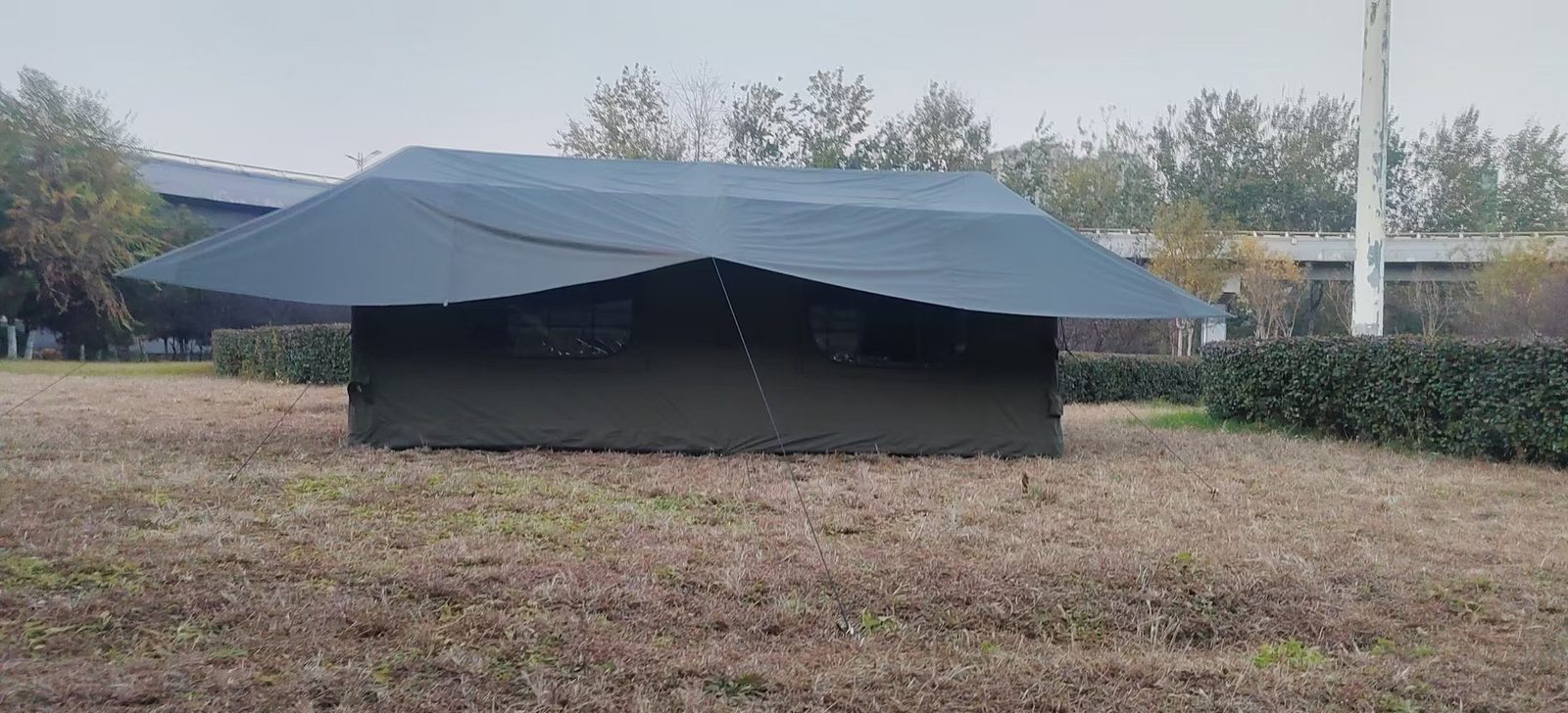
Which specifications are worth locking now, because they keep selling through spring in northern markets. A 280G poly-cotton ripstop canopy on the ZT-RCH23 (46 kg net, 8 cm closed) or a 320g poly-cotton on the ZT-CB02 breathes measurably better than pure polyester and visibly reduces morning condensation. A PU 5000mm bottom rather than 3000mm matters to anyone camping on wet March ground. And the 17.28 m² inflatable cabin (ZT-IA17-31, 3.6 × 4.8 × 2.3 m, ∅15 cm air beams) ships with a dedicated stove chimney jack, which is the difference between a four-season product and a summer one.
Water heating is the other category that quietly sells in cold weather. The QBY-Z10H runs 10 kW / 34,120 BTU at 6 L/min with digital thermostatic control between 35 and 55 °C and a 50 K temperature rise. The QBY-D6K is the flue type at 6 kW / 3 L/min. Specify which one your market actually wants before the order is placed: gas type and venting rules differ by country, and a model swap after production starts is the single most common cause of a delayed shipment we see.
There is a cheaper hedge than guessing. Rooftop tents start at MOQ 1 and inflatable cabins at MOQ 5, so a buyer can air-freight one 55 kg gross sample in December, test it in real January weather, and still commit the container in early January. The air freight costs money. Being wrong about a 500-piece order costs considerably more.
If you are building a spring 2027 range, the useful next step is a frozen specification and a loading date, not a catalogue. Send your target market, retail price band and the gas type your market uses, and we will come back within 24 hours with a tiered quotation and a container schedule that respects the Lunar New Year.